
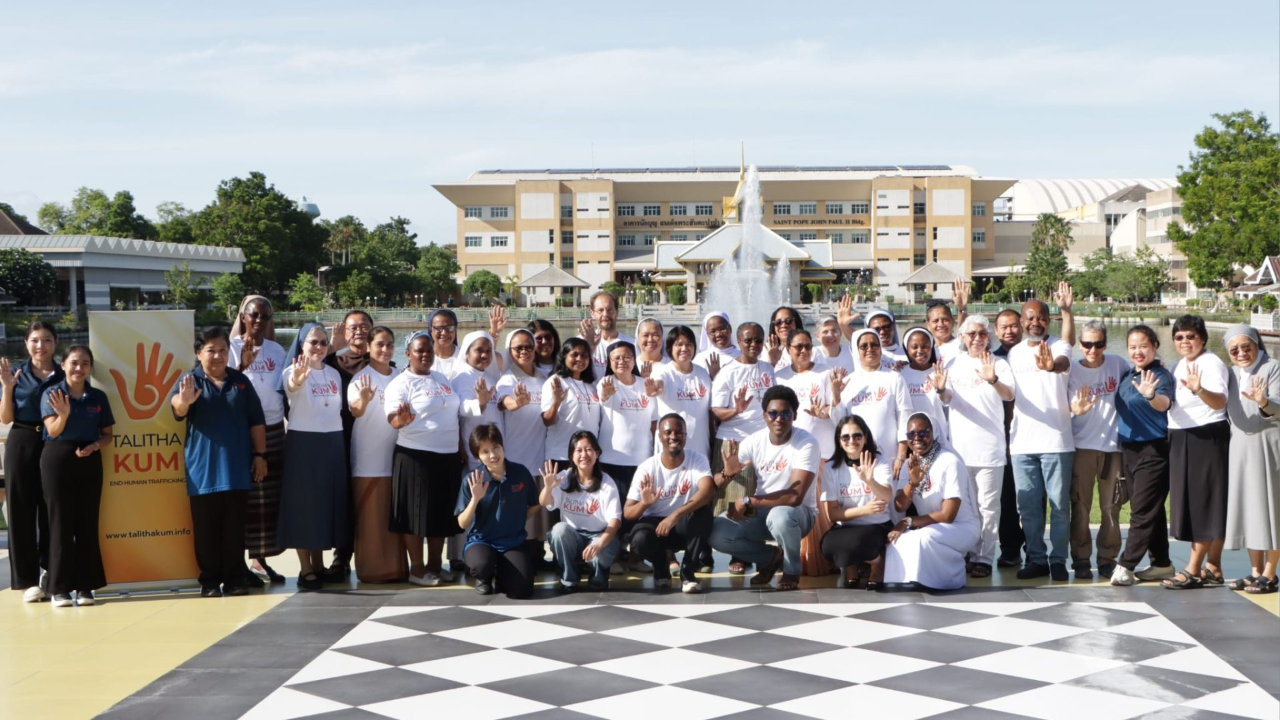
Catholic anti-trafficking leaders meet in Thailand to strengthen global response
The 6th International Edition of the Talitha Kum Leadership Training Course gathered 30 participants from 23 countries at the Baan Phu Waan Pastoral Training Center in Samphran, west of Bangkok, from June 24–30.
Named after the Gospel phrase Talitha Kum (“Little girl, I say to you, arise”), the global network seeks to prevent human trafficking, protect survivors, and address the systemic conditions that make people vulnerable to exploitation.
According to the latest estimates, about 49.6 million people worldwide are living in modern slavery, including 27.6 million in forced labor and 22 million in forced marriage.
 The United Nations Office on Drugs and Crime (UNODC) reported that the number of detected trafficking victims in 2022 was 25% higher than in 2019, with child victims increasing by 31%. Women and girls accounted for 71% of identified victims.
The International Labor Organization (ILO) estimates that forced labor generates about US$236 billion in illegal profits each year, with forced sexual exploitation accounting for US$173.2 billion, or nearly three-quarters of the total.
Asia and the Pacific bear the heaviest burden of modern slavery, with 29.3 million people estimated to be living in exploitation. The ILO estimates that forced labor in the region generates approximately US$62 billion in illegal profits annually.
UNODC has also identified Southeast Asia as a major hub for trafficking linked to online scam compounds, estimating that at least 300,000 trafficked people have been forced to work in scam centers across Myanmar, Cambodia, Laos, and the Philippines.
These criminal enterprises generate an estimated US$50 billion to US$75 billion annually and are increasingly exploiting artificial intelligence and deepfake technology to expand fraud operations.
In response, the Association of Southeast Asian Nations adopted the 2025 Guideline on the Non-Punishment Principle to help ensure that trafficking victims are not prosecuted for crimes they were compelled to commit while under the control of traffickers.
